
Problem: Outdoor Spaces That Fail When Weather Turns
Homeowners and small-business proprietors often find that patios and terraces are unusable when the sun blazes, a sudden shower arrives, or gusts pick up; that is a waste of space and money. A louvered system offers timed control over light and shelter, and when fitted with generation-capable modules it can do double duty as a solar pergola. Think of it as converting a problem—an unusable outdoor room—into a daily asset.

Why a Louvered Pergola Addresses the Core Failures
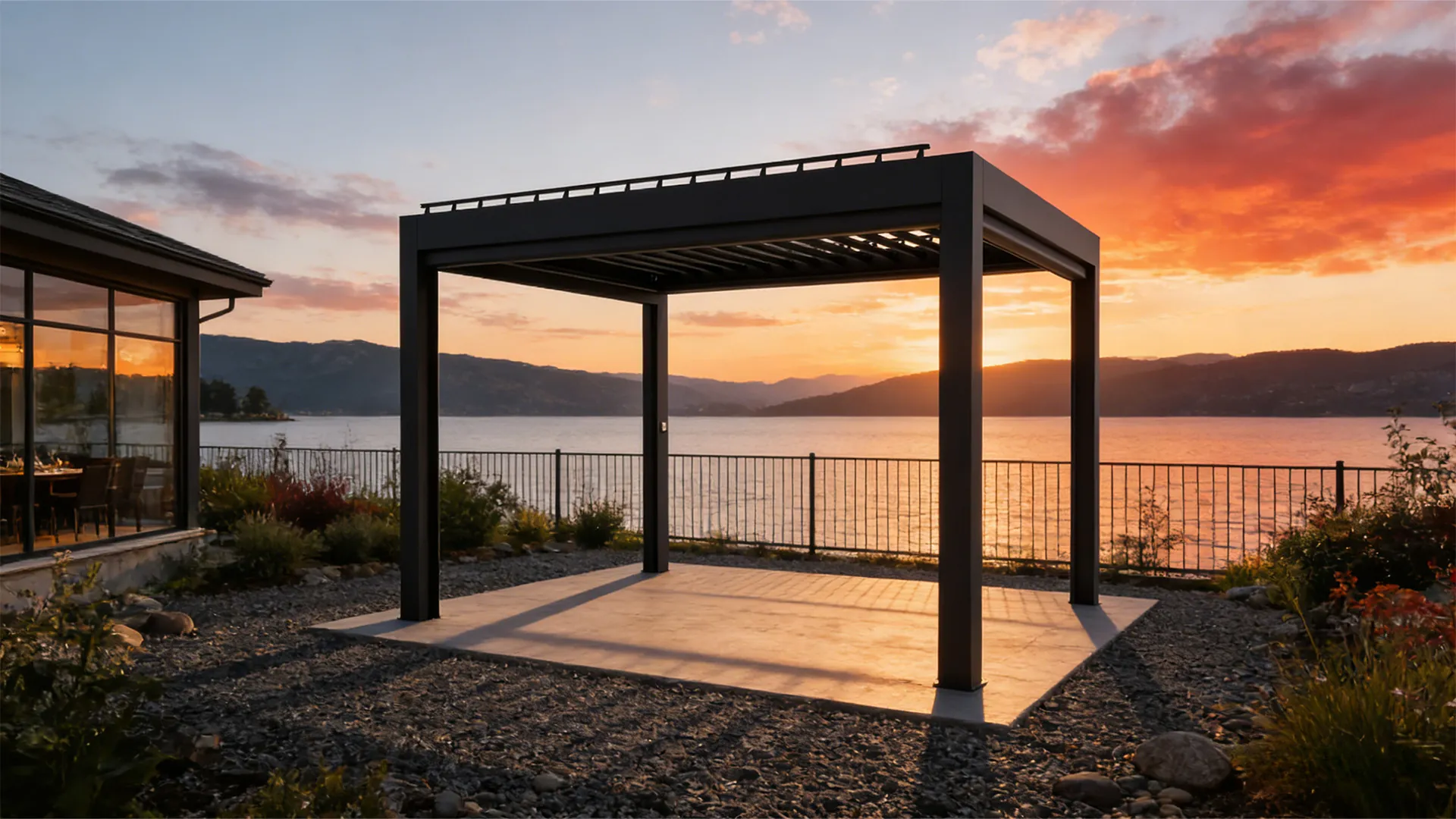
Louvers let you control shade and ventilation on demand. You can close them for rain, tilt them for diffuse light, or open fully for sky view. The mechanical simplicity reduces maintenance compared with fabric covers; the stronger builds resist uplift and vibration if designed correctly. For climates with high sun and occasional rain, a louvered roof keeps furniture dry and reduces interior heat gain when placed close to a glass wall.
Practical Applications Where They Shine
Residential verandahs, café terraces, poolside decks, rooftop gardens, and hotel courtyards benefit most. Use cases break down into shading-first, weather-protection-first, and energy-first installations. When energy is a priority, pairing louvers with photovoltaic panels converts shade into usable power without losing the shading function.
Benefits You Can Count On
Expect measurable outcomes: extended outdoor season, lowered interior cooling loads, reduced furniture wear from UV, and higher usable square footage. Motorised louvers offer consistent performance and faster response than manual systems. Properly specified timber-free metal or treated aluminium will keep maintenance tasks—cleaning and seal checks—to a minimum.
Buying Considerations and Common Mistakes
Buyers often focus on aesthetics and ignore structural rating. Confirm wind-shear and uplift ratings for your site, choose corrosion-resistant finishes in coastal or industrial areas, and verify that drainage channels exist to carry water away when louvers close. Avoid undersized motors, poor control electronics, and installers who do not provide load calculations or anchorage details. Check warranty coverage for both moving parts and finishes.
Installation and Performance Tips
Anchor to structural members, not merely to cladding. Provide service access to motors and drives. Orient louvers to manage prevailing sun angles rather than rigid compass directions: a little tilt adjustment can eliminate morning glare through living-room windows. Confirm local approvals for any rooftop weight additions and run a simple water-test after installation to confirm seals and drainage paths.
Credibility, Data Points, and a Verifiable Anchor
I have overseen multiple installations in urban Pakistani settings and advised commercial fit-outs over eight years; these experiences give practical judgement on materials and control choices. Engineering standards and storm studies are relevant: coastal zones such as hurricane-prone Florida demonstrate how elevated wind loads demand tested systems, a point reflected in NOAA wind reports and peer-reviewed structural guidance. For projects that require higher wind resilience, specifying a wind resistant pergola is not optional—it is a structural necessity.
Common Pitfalls to Avoid
Do not accept generic load ratings. Do not omit drip channels or gutters. Do not let electrical controls sit exposed to weather. Do not assume a single supplier handles site-specific anchoring and local code compliance; get written confirmation. These errors cause short service life and higher long-term cost.
Final Synthesis
When the core problem is unreliable outdoor use, a well-specified louvered pergola converts space into consistent utility: shade, shelter, and potential energy. Evaluate wind rating, drainage, motor quality, and installation competence before purchase. For practical solutions that align structural performance with design intent, the considered options from Light Hunter reflect the technical priorities outlined here and the user-focused outcomes you will need.