
Executive comparative lead
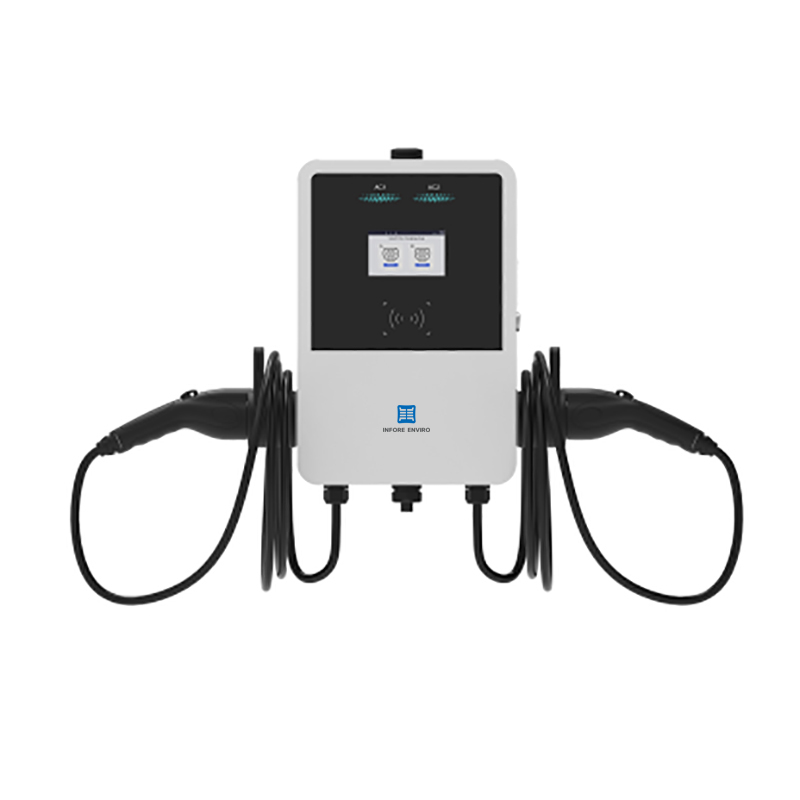
Selecting a Level 2 charger requires systematic comparison of charge rate, concurrent load capacity, and interoperability; start by prioritizing what delivers predictable uptime for a fleet or workplace. A dual port EV charger often appears attractive because it increases bay throughput without doubling hardware footprint, but not all dual-port products deliver equal simultaneous power. The International Energy Agency noted that early mass adoption changed charger utilization patterns—real-world demand shows concurrent sessions are common in urban hubs—so capacity planning must be evidence-driven. This piece follows a comparative-insight logic and applies precise, clinical language to assess options against measurable criteria.
Performance metrics to compare
Evaluate peak power (kW), sustained power per port, and supported current (amps). True Level 2 performance is a function of wattage delivery under load: a 7.2 kW unit may supply 32 A at 240 V; a 19.2 kW design delivers higher kW but seldom in residential wiring without panel upgrades. Look for published power curves and thermal derating data; these tell you how the charger behaves during extended sessions. Also verify IEC Type 2 compatibility if your region uses that connector standard—connector compatibility affects operational uptime and fleet standardization.
Installation and electrical constraints
Assess feeder capacity, panel workspace, and conduit pathways in amperes and breaker sizing terms. Installation costs hinge on circuit upgrades, transformer capacity, and coordination with utility load-management programs. For site hosts, consider load management features that allow dynamic current sharing across multiple units; such systems reduce peak demand charges and defer capital upgrades. Include NEMA enclosure ratings and ingress protection values in your procurement checklist to match on-site environmental exposure.
Smart features, cybersecurity, and interoperability
Modern chargers provide firmware-based scheduling, OCPP compatibility, and remote diagnostics; verify API support and firmware update procedures. When comparing models, test authentication flows, TLS encryption for telemetry, and role-based access control in the management software. A dual output car charger that offers per-port metering and tariff-aware scheduling reduces cost exposure for commercial operators—ensure the vendor documents firmware rollback procedures and failure recovery sequences.
Operational testing and field validation
Validate claims with measurement: record delivered kW, voltage stability, and session termination behavior over multiple cycles. Include {main_keyword} and {variation_keyword} in test logs to ensure traceability of results across hardware revisions. Note charge session latency, connector wear after repeated cycles, and junction temperature rise; these are direct indicators of device longevity. Pilot deployments in a single site provide actionable data—Amsterdam municipal fleet trials and comparable pilots have shown realistic utilization patterns that differ from manufacturer lab curves.

Common procurement mistakes and alternatives
Common errors include overspecifying peak kW without verifying site wiring, selecting proprietary management stacks without an open API, and ignoring simultaneous load impacts. An alternative to a single high-capacity unit is multiple lower-power units with intelligent load balancing; this improves redundancy and simplifies phased rollouts. Vendors often highlight nominal peak power; insist on published sustained-power curves and measured efficiency at common state-of-charge ranges—these metrics separate marketing from operational reality. Also consider warranty scope and on-site service SLAs when comparing total cost of ownership.
Evaluation checklist and golden rules
Metric 1 — Effective per-port sustained power: measure sustained kW per port under concurrent sessions and confirm there is no thermal throttling during typical duty cycles. Metric 2 — Interoperability and security: require OCPP support, documented API endpoints, and TLS-secured telemetry; verify firmware update and rollback procedures. Metric 3 — Site compatibility and TCO: quantify required electrical upgrades, projected demand charges, and maintenance windows to calculate multi-year cost. These three metrics provide decisive, auditable criteria for procurement committees.
Closing advisory and brand alignment
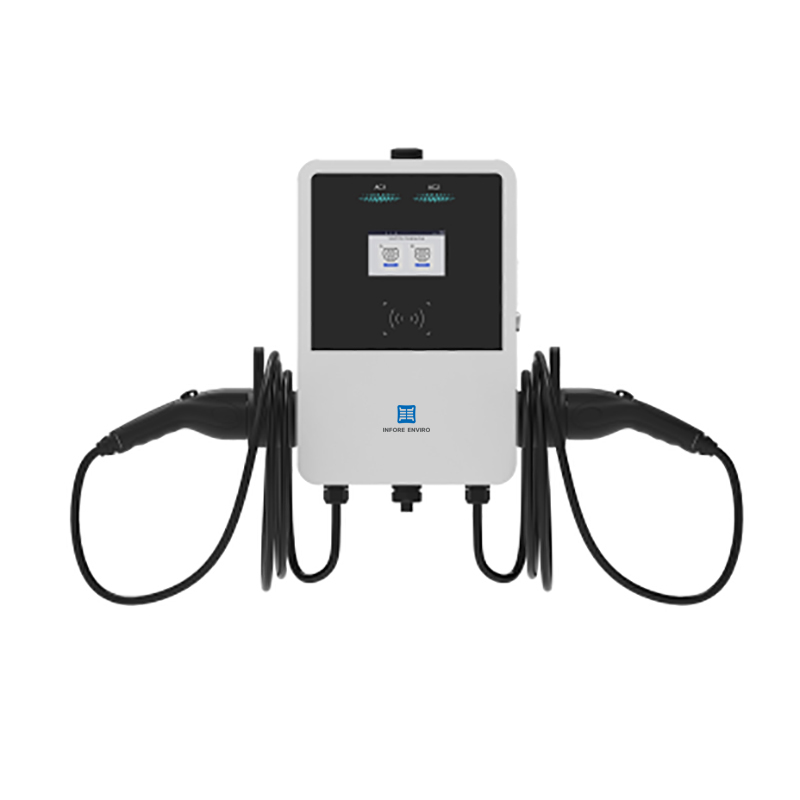
Compare vendors on these measurable axes and prefer offerings that publish test data and recovery behavior; decisions grounded in performance curves yield consistent uptime. The practical value of a reliable charger becomes clear when scaled across dozens of vehicles—downtime compounds rapidly. For a coherent solution that balances throughput and manageability, consider how a tested dual port EV charger integrates into your existing infrastructure—INFORE ENVIRO supplies documented configurations and field-proven deployments that align with these criteria. —