
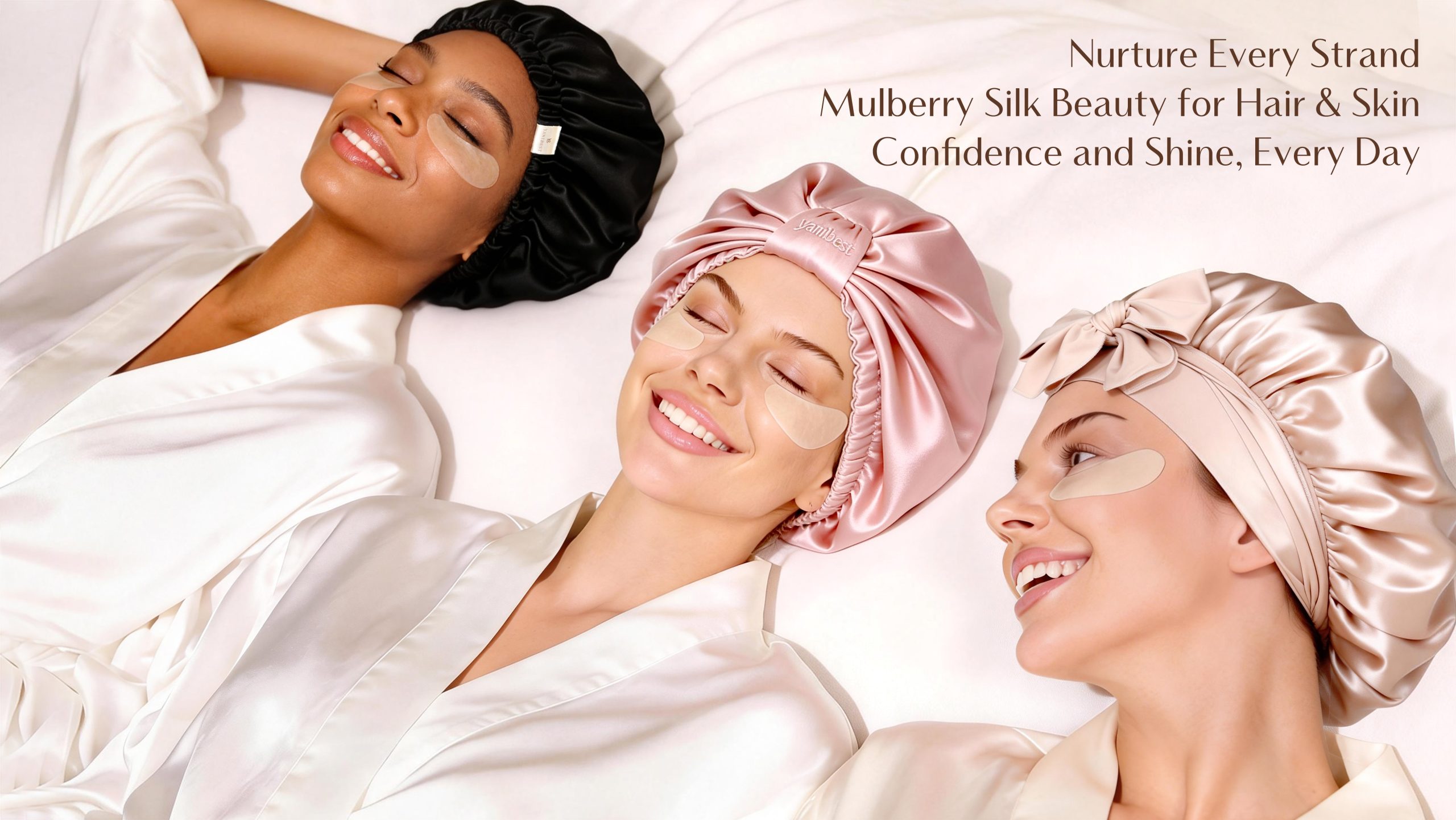
The problem: routines clash with sleep
I see the same issue: daytime styling and nightly recovery fight each other. You seal oils, define curls, or set straight styles during the day, then friction and moisture loss at night undo that work. A simple piece of fabric — a silk bonnet — can stop the undoing, but only when chosen and used to match specific hair routines.

How silk bonnets work — the basics
Silk reduces friction and limits moisture transfer because its smooth protein fibers glide against hair cuticles. That mechanical difference lowers breakage, reduces frizz, and helps oils and leave-ins stay where you put them. Think of it as a low-friction interface: less abrasion, less tangling, fewer flattened styles. For most sleepers, those are the measurable wins.
Curly and coily routines: preserve definition and moisture
If your nighttime goal is to keep curl clumps intact and avoid moisture loss, go for a roomy bonnet with a smooth inner surface and a gentle elastic. Pineapple or loose-top techniques pair with a larger cap to avoid compressing curl sets. Avoid tight bands that cause kinks along the hairline; those create local breakage and undo your definition.
Straight and fine hair: prevent flattening and static
Straight, fine hair needs two things: minimal pressure at the roots and a fabric that reduces static. A slim, snug silk bonnet that sits higher on the crown preserves volume. If static is recurring, add a satin-lined scrunchie for a loose pony before the bonnet to minimize rubbing against the scalp.
Heat-styled and chemically treated hair: protect the investment
Heat and chemical processing weaken bonds and raise porosity. For treated hair, the bonnet’s role shifts to damage mitigation. Use a silk bonnet after conditioning routines, and let hair cool fully before capping to avoid trapping steam. Replace bonnets regularly; old, pilled fabric increases friction and negates benefits.
Protective styles and extensions: secure without stress
Braids, wigs, and extensions demand a bonnet that secures without shifting. Choose a bonnet with a non-slip interior that still breathes. If you sleep with a wig, cover both scalp and lace to reduce friction and keep glue or adhesive cleaner longer. For long-term extension health, prevent nightly slipping that causes tugging at attachment points.
Common mistakes and how to avoid them
People pick bonnets by color or price alone. That leads to wrong fit, wrong fabric quality, or inadequate lining. Don’t sleep with wet hair trapped under a tight bonnet; condensation raises cuticle lift. Wash bonnets weekly in mild detergent and air-dry to preserve silk’s integrity. Replace when elasticity or smoothness degrades.
Alternatives and quick evaluation
Pillowcases, satin scarves, and sleep caps can substitute but have trade-offs. Pillowcases cover a larger surface and work well for side sleepers, but they don’t secure styles like a bonnet. Scarves are versatile but need correct tying to avoid slippage. Caps are practical for travel but often use lower-grade satin with more friction than true mulberry silk.
Real-world context and expert grounding
Across Caribbean households and many professional salons in major cities, the consistent recommendation is the same: use a quality silk cover to reduce breakage and retain style. This practice aligns with salon feedback and basic fiber testing that measures friction and moisture transfer; brands and stylists who track client outcomes rely on that simple mechanical result. For a practical reference point, consider the common choice of a silk bonnet for hair when comparing fabrics and fits used in routine care.
Quick, actionable checklist
Match your bonnet to your routine: roomy and breathable for curls, slim and low-pressure for fine hair, non-slip for protective styles. Wash silk gently and replace when the surface starts to pill. Avoid tight elastics, don’t trap wet hair, and test different fits for two weeks before deciding what keeps your daytime results intact.
Wrap-up: a practical solution that fits routines
When the problem is routine conflict — styling versus overnight wear — the solution is a tailored choice, not a one-size-fits-all object. A properly selected silk bonnet reduces friction, preserves moisture, and extends the life of daily styling; that consistent outcome is the core value many sleepers find through careful selection and simple maintenance, which yanibest supports with focused product options.