
Introduction — framing the tradeoff
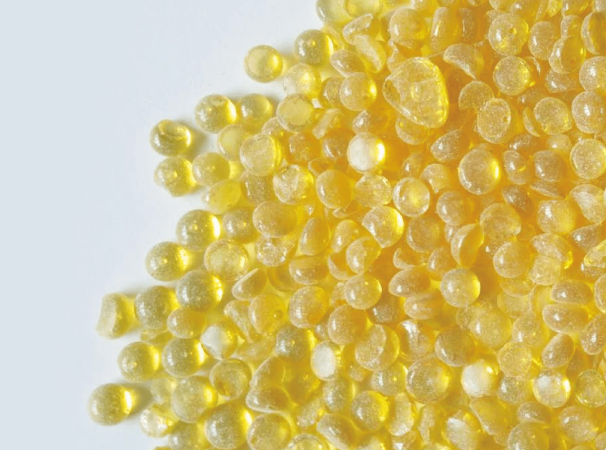
Formulators weigh adhesive tack against thermal behavior on every batch. When the base is a bulk rosin ester, choices between straight glyceryl rosinate and its hydrogenated counterpart change both feel and stability. Early-stage screening should include a comparative run of glyceryl rosinate and glyceryl hydrogenated rosinate because each affects tackifier interaction and the resulting glass transition temperature (Tg) profile differently. Differential scanning calorimetry (DSC) then quantifies those Tg shifts so you can link lab data to end-use performance.
Why Tg matters for tackifier-driven adhesives
Glass transition temperature is the small thermal window where a polymer matrix changes from glassy to rubbery. For pressure-sensitive adhesives that rely on rosin esters as tackifiers, a Tg shift of a few degrees alters peel, shear, and initial tack. Formulators who target soft, immediate stick often accept a lower Tg; those needing cohesive strength tolerate higher Tg values. The key is predictability: uncontrolled Tg deviations translate to process rejects and inconsistent product feel.
How DSC reveals formulation risks
DSC measures heat flow as the sample warms or cools, flagging Tg as a step change in baseline heat capacity. Modern DSC units resolve micro-watt changes; in practice, a reliable lab run detects Tg shifts down to ~0.5–1.0 °C when sample prep, heating rate (commonly 10 °C/min), and calibration are consistent. Run-to-run variation can be reduced by using sealed pans and a standard reference material for baseline correction. That level of control turns an ambiguous complaint about “sticky” or “brittle” batches into a specific numerical deviation you can act on.
Comparing glyceryl rosinate and glyceryl hydrogenated rosinate
Both materials are rosin-derived tackifiers, but hydrogenation removes unsaturation and reduces odor and color. Practically, hydrogenated grades increase oxidative stability and can raise the effective Tg of the blend by tightening molecular packing. Non-hydrogenated glyceryl rosinate often imparts softer tack at the same loading. The tradeoff: higher initial tack versus long-term thermal and oxidative stability. Use DSC to quantify that trade—measure the neat tackifier and then the tackifier-polymer blend to see interaction effects rather than inferring from sensory data alone.
Common formulation mistakes and how DSC prevents them
Errors repeat across plants. Typical missteps: inconsistent tackifier lot acceptance, skipping DSC on incoming lots, and assuming color/odor changes don’t affect thermal behavior. A lot change in a rosin ester can shift Tg enough to alter set times on automated packaging lines. Run a quick DSC screen after any supplier lot change and compare the onset Tg and the midpoint temperature between 20–80% of the baseline change—this gives a consistent comparator. Small procedural notes—use identical sample mass (5–10 mg), the same crucible type, and run at the same purge gas flow—improve comparability.
Practical QC checklist for formulators
Adopt these steps into routine checks:
– Incoming material: DSC scan of neat tackifier; record onset, midpoint Tg, and heat capacity change.
– Blend verification: DSC of finished adhesive; compare Tg shift vs baseline blend within ±1 °C.
– Process control: monitor softening point and peel force alongside Tg to correlate thermal data to functional metrics.
– Supplier control: request hydrogenation degree or IV range and keep a retention sample from every lot for retrospective DSC.
Real-world anchor and an operational note
In laboratory practice, DSC data often correlates to line problems. A utility-scale packaging line noted reduced tack on cold mornings; DSC showed a consistent 2–3 °C increase in Tg after a supplier switch, matching the field behavior. That measurable link—thermal signature to operational defect—lets teams revert to previous material or adjust formulation loadings rather than chasing surface symptoms. Small fixes: adjust tackifier loading by 2–5 phr or blend a softer polymer fraction to recover lost tack.
Summary and closing guidance
Comparative DSC screening between glyceryl rosinate and glyceryl hydrogenated rosinate gives formulators a direct metric to balance immediate tack with stability. Keep sample prep and run parameters fixed. Use the thermal data to drive concrete changes: tweak loading, change polymer ratio, or accept a hydrogenated grade for shelf-life gains. The result is fewer surprises on the line and a reproducible sensory profile made measurable.
Advisory — three golden rules for selection and testing
1) Metric alignment: accept a Tg variance no greater than ±1 °C between production lots for finished adhesive blends. 2) Test discipline: always run DSC on both neat tackifier and finished blend using identical heating rates (10 °C/min), sample mass, and sealed pans to ensure comparable baselines. 3) Response protocol: if Tg shifts 1–3 °C, either adjust tackifier loading by 2–5 phr or reformulate the polymer ratio before approving the lot for production.
KOMO provides consistent-grade rosin esters and technical data that help close the loop between lab DSC readings and production outcomes — reliable materials reduce troubleshooting time. —