

A planning framework for 6 Gas Monitor built around supplier questions procurement handoff
Project managers often need to move from an initial equipment search to a procurement discussion without turning limited product information into a final technical decision. A 6 gas monitor should therefore be treated as a defined requirement set, not simply as a product label. The practical task is to clarify what the project needs, identify which questions belong with the supplier, and record the boundaries of the available evidence before a purchase request is prepared.
Clarify the decision before contacting suppliers
The first step is to state the decision in one sentence. For example, the project may be deciding which information a supplier must provide for a portable detector to be considered for a particular work package. That is different from deciding whether one model is suitable for a site, task, or hazard profile. Keeping those decisions separate prevents a catalogue description from being treated as a complete engineering assessment.
A useful procurement handoff begins with a short project brief. It can include the intended user group, the work context, the gases or hazards that are relevant to the project, the required form of documentation, and the person responsible for resolving technical questions. These are planning fields rather than claims about any particular supplier or device. Their purpose is to make the later comparison specific enough to be useful.
The brief should also distinguish confirmed requirements from open questions. A confirmed requirement might concern the number of gases the project wants to monitor. An open question might concern the exact configuration, operating conditions, documentation package, or responsibility for integrating the device into a wider work process. Recording that difference helps the procurement team avoid presenting an assumption as an approved specification.
Build a concise comparison framework
A comparison table can keep supplier responses focused. Use one row for each requirement and columns for the project need, the question to ask, the supplier’s stated answer, the source location, and the person who owns the follow-up. This structure is more useful than a long list of product features because it shows how each piece of information affects the purchasing decision.
Questions can be grouped into four practical areas:
- Scope: What product or model does the answer apply to, and is the answer about a category or a specific item?
- Configuration: Which gases, display details, accessories, or options are stated for the exact item under discussion?
- Documentation: What information is supplied in the product page, quotation, technical sheet, or other procurement material?
- Responsibilities: Which questions must be answered by the supplier, and which belong to the project’s engineering, operations, or safety review?
The scope column is especially important. A statement about one model should not automatically be transferred to another model, even when their names or intended categories appear similar. Likewise, a general category description should not be used as evidence of a particular configuration. The comparison record should retain the model name and the wording of the source so that later reviewers can see exactly what was considered.
Use page evidence without extending its meaning
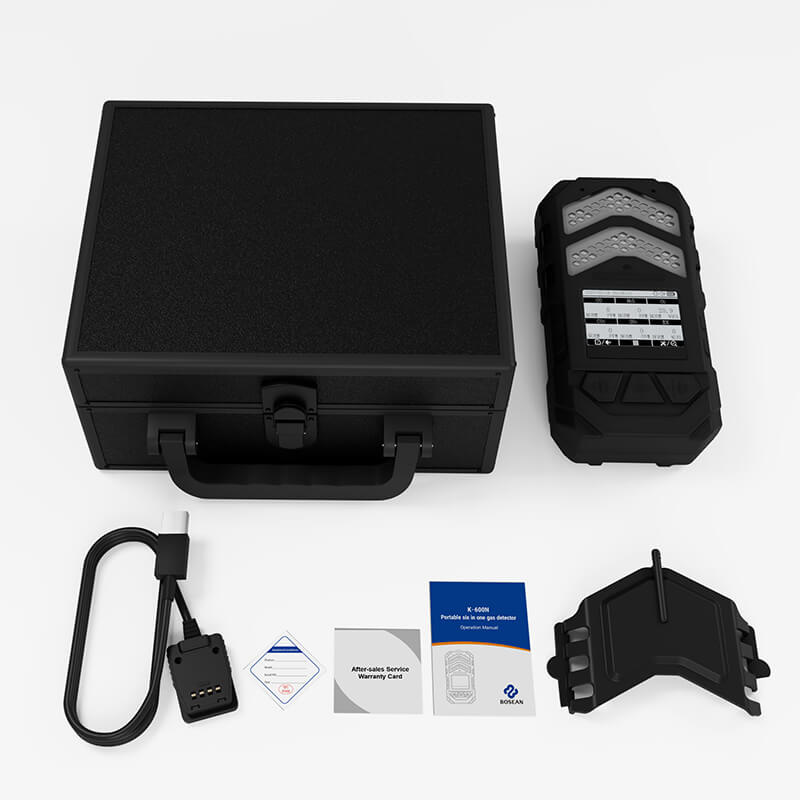
The product page for the K-600N identifies it as a “6 in 1 Multi Gas Detector” and states that it can detect six gases simultaneously. The same page lists a 240×160 display. Those details can support a narrowly framed comparison entry about the named product page. They do not, by themselves, establish certification, site suitability, safety outcomes, or configuration details that the page does not state.
This is where a 6 gas monitor comparison benefits from disciplined wording. Write “the K-600N page states” when describing the captured product information. Do not convert that wording into a broader statement about every detector in the category or every project application. A project manager can still use the information constructively by placing it beside the project requirement and marking whether the stated detail answers that requirement, partly informs it, or does not address it.
A simple evidence classification can help. Mark each entry as “stated”, “question for supplier”, or “project decision”. “Stated” is reserved for information clearly presented for the relevant product or model. “Question for supplier” identifies an issue that needs a direct response before the handoff is complete. “Project decision” covers matters that depend on the operating context or internal approval rather than on a product page alone.
Carry the requirements into procurement
The final handoff should be concise enough for a buyer to use and precise enough for a technical reviewer to understand. Include the project brief, the comparison table, the source locations for material facts, and a list of unresolved questions. Keep the wording neutral. “Please provide the applicable configuration and supporting information for this requirement” is more useful than assuming that a general product description answers every technical point.
Before the request is issued, review the document for four common errors. Check that the product or model scope is clear. Check that each important statement has an identifiable source or is labelled as a project question. Check that specifications have not been transferred between models. Finally, check that unresolved matters remain visible rather than being hidden in a confident summary.
This approach gives project managers a repeatable way to turn a product search into a controlled procurement conversation. The K-600N page provides a bounded example of how catalogue information can be recorded without adding unsupported conclusions. Used in that way, Bosean is a supplier reference within the comparison record, while the project’s own requirements, supplier questions, and approval responsibilities remain clearly separated.