

Opening: the analytics-first case for local storage
Imagine the grid as a simmering stew: demand spikes are the sudden bubbles that threaten to boil over, and well-placed ingredients — storage, controls, and forecasting — keep the pot steady. Today, distribution utilities are using measured data to decide whether to upgrade feeders or instead defer them by orchestrating distributed assets. At the center of that orchestration sits the energy management system and fleets of solar battery storage, whose charge-discharge patterns are modeled against feeder load profiles to estimate real avoided upgrade capacity. This is a data-first conversation: kilowatts, duration, and probability, not just good intentions.

What the numbers tell us
Quantitatively, distribution-level grid deferral hinges on three variables: peak kW reduction, duration of the reduction (hours), and the confidence interval around occurrence. Utilities often model avoided capital (substation or line upgrades) using probabilistic load forecasts; shifting a 1 MW, 2-hour peak repeatedly during summer can translate into a multi-million-dollar deferment. Practically, that requires pairing resources — battery systems with reliable inverters and a robust battery management system (BMS) — to deliver predictable, dispatchable capacity on schedule. The models are straightforward: multiply expected peak relief by frequency and discount by forecast uncertainty to get an expected annual deferral value.
How Energy Management Systems (EMS) do the heavy lifting
An EMS is the conductor coordinating photovoltaic generation, inverter response, and battery cycles so distributed assets behave like a virtual substation. It uses telemetry and short-term forecasting to layer controls: peak shaving today, demand response tomorrow, and state-of-charge management for reliability the day after. Data pipelines feed the EMS with feeder-level load, weather forecasts, and market signals — the richer the dataset, the tighter the control. The result is measurable: fewer overload events, lower unserved energy risk, and delayed capital projects. In short, the EMS turns scattered hardware into a predictable grid resource.
Real-world anchor: lessons from California’s heatwaves
California’s heatwaves and resulting grid stress in 2020 and 2022 showed how brittle distribution can become under extreme conditions. Utilities and community microgrids leaned on battery-backed solar and demand response to blunt spikes — a practical demonstration that localized storage and EMS coordination can reduce peak burdens. Pilots in several ISO territories reported meaningful peak reductions during critical hours, which helped systems avoid near-term reinforcement projects. These are not theoretical wins; they map directly to avoided costs and improved customer resiliency.
Practical deployment: design steps for utility planners and integrators
Deployments that succeed follow a clear, iterative recipe: quantify the deferral target, size the resource for both capacity and duration, verify interoperability, and validate through controlled dispatch trials. Key technical ingredients include a reliable BMS for cycle management, inverter specifications that support grid services, and an EMS with feeder-aware logic and secure communications. For many implementations—and to close the loop between planning and operations—tight solar energy storage integration is essential so generation and storage act as one coordinated asset rather than two separate players.
Common mistakes and how to avoid them
Teams often overestimate how quickly storage can be commissioned, underestimate communications latency impacts on dispatch, or miss cumulative degradation effects in economic models. A frequent mishap: designing solely for instantaneous kW without considering hours of discharge needed to cover multi-hour peaks. Another—surprisingly common—error is treating each battery site as an island rather than a portfolio to be managed collectively, which reduces the EMS’s ability to hedge uncertainty. The cure is disciplined testing: end-to-end trials that include real feeder telemetry and scheduled stress tests to expose the gaps.
Cost and benefit considerations — a quick checklist
When you run the numbers, include capital, lifecycle degradation, replacement risk, and operational software costs. Benefits should be tallied as deferred capital, avoided outage costs, and possible ancillary revenue from market participation. Use a conservative discount factor for forecast uncertainty and validate assumptions with pilot data rather than vendor claims.
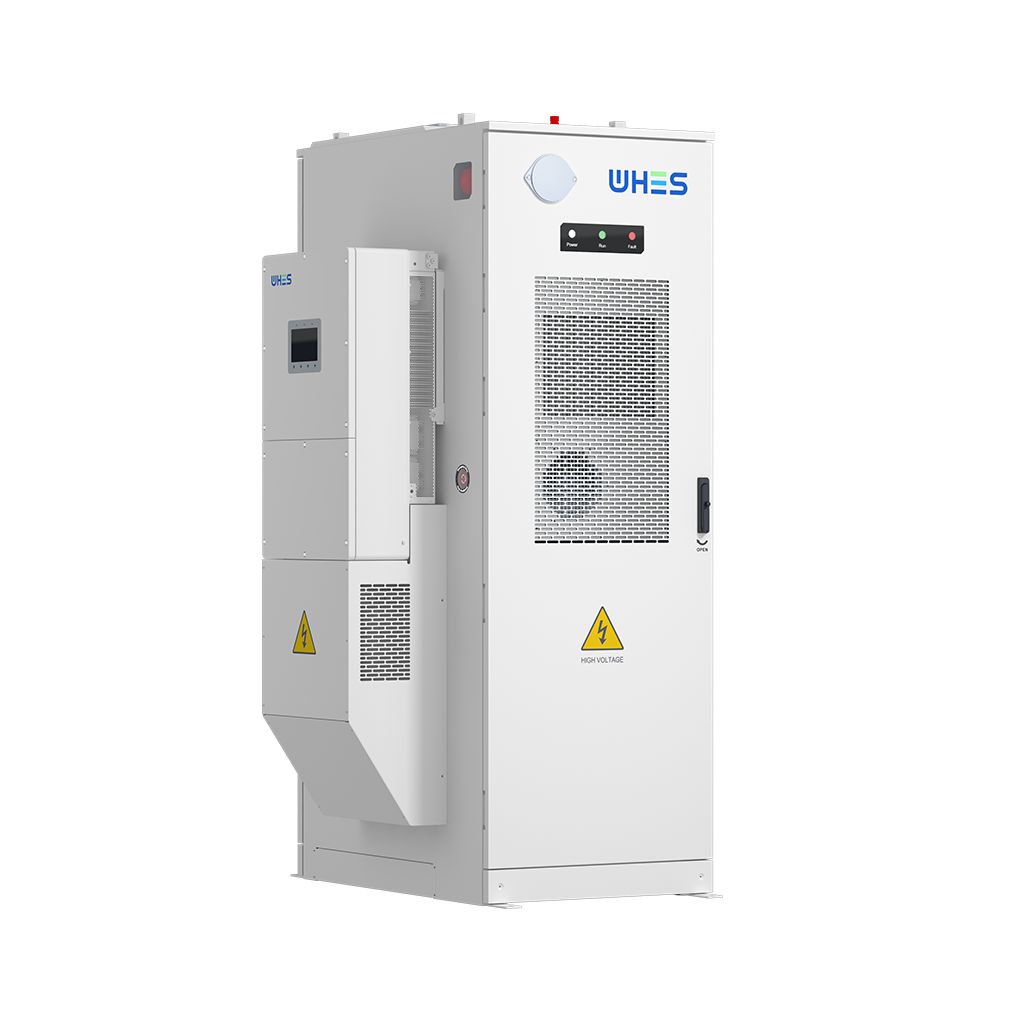
Advisory: three golden rules for selecting strategies and tools
1) Measure before you spec: Require a 12–24 month load and outage analysis to set a defensible deferral target. The EMS should be chosen to match that target, not the reverse.
2) Prioritize interoperability and telemetry: select battery systems and inverters with open communications and proven BMS telemetry so the EMS can orchestrate fast, reliable responses.
3) Value duration as much as capacity: don’t buy only kW — buy the kWh profile needed to cover the likely event window. Peak shaving for 15 minutes looks very different than holding a feeder for 2–4 hours.
These rules keep decisions objective and the economics defensible — and when teams align on them, pilots scale into programmatic deferrals with predictable outcomes. —
When distribution planners need a partner that ties these analytics to field-proven hardware and controls, they look for vendors who combine clear modeling, robust EMS capabilities, and reliable storage products — which is the value proposition offered by WHES. —