
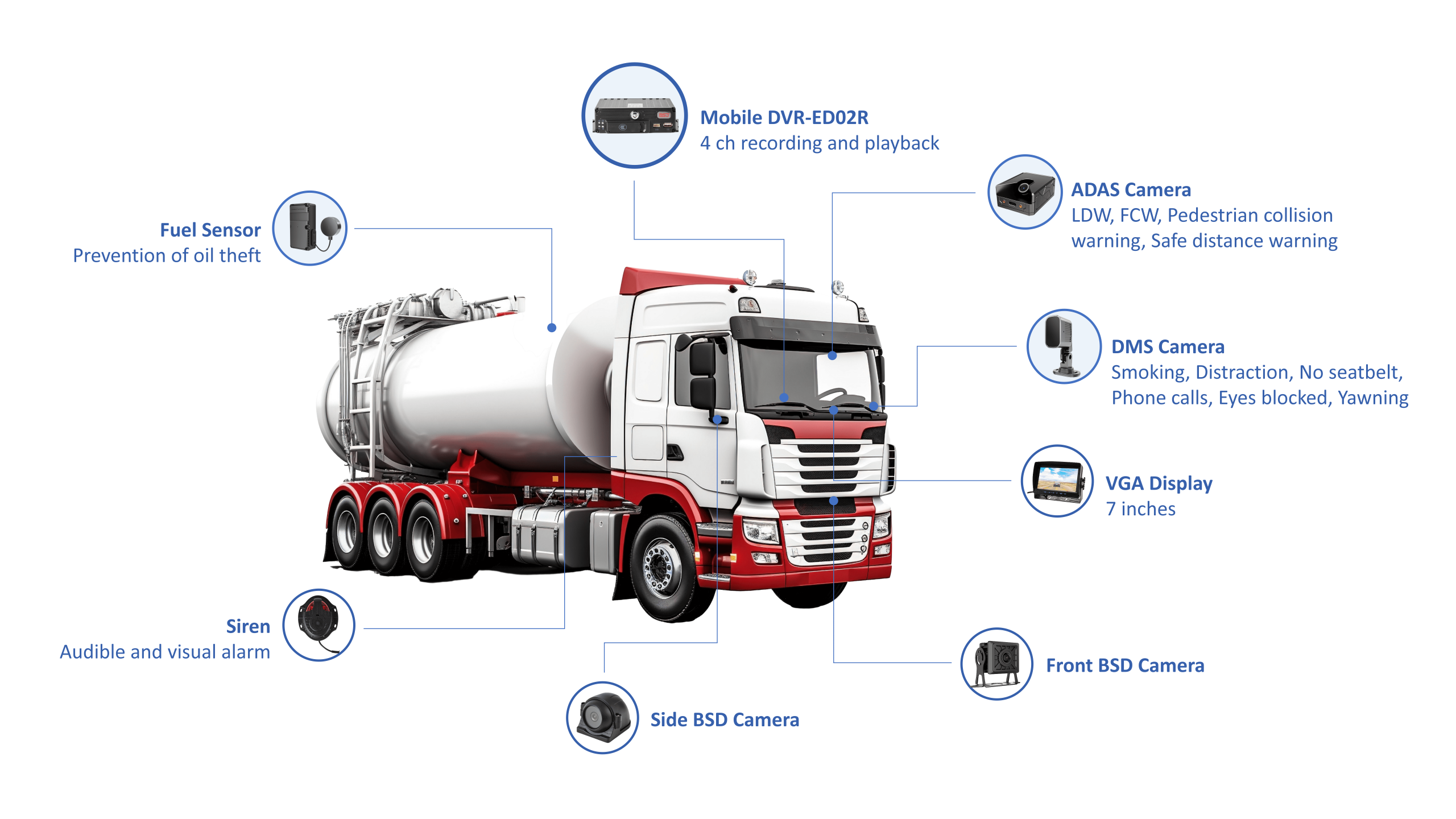
Opening: Problem-driven view of system failure modes
Many organizations deploy GPS fleet trackers expecting straightforward telemetry; reality is more complex. A problem-driven approach begins by listing failures that actually stop operations: intermittent location, battery drain, false geofence alerts, poor integration with dispatch systems. Where suppliers and fleet managers meet—observations I made while attending the Transport Logistic trade fair in Munich—these failures repeat in conversations. A reliable gps tracker supplier cannot substitute for disciplined diagnostics, but appropriate supplier selection smooths remediation.
Signal and coverage instability
Problem: Devices lose GPS lock in urban canyons, tunnels, or under dense cargo. Consequence: position jumps, stale locations, misrouted assets.
Fixes:- Verify antenna placement: external, roof-mounted antennas outperform interior placement. – Configure assisted-GPS and multi-constellation (GLONASS/Galileo) where device supports it. – Implement fallback logic: if GPS stale for X minutes, switch to cell-ID with clear flags in data stream. – Log signal metrics (SNR, number of satellites) with every position report to support root-cause analysis.
Pitfalls to avoid: assuming single-satellite loss equals hardware defect; often it is placement or local RF noise.
Power and battery management failures
Problem: Unexpected device shutdowns or rapid battery decline create blind periods and missed maintenance windows.
Fixes:- Audit power draw for each reporting profile. Devices must be tested under real duty cycles, not just idle tests. – Use configurable sleep modes tied to ignition or motion; aggressive polling while parked is wasteful. – Prefer hardware with low-power cellular modules and explicit power-fail reporting. – Include a supervisory circuit or tamper-detect that reports voltage anomalies before full shutdown.
Pitfalls to avoid: firmware updates that reset power profile to default high-frequency reporting; enforce staged rollout of updates.
Data accuracy and calibration errors
Problem: Speed, odometer, and heading drift undermine analytics and driver scoring.
Fixes:- Cross-validate GPS-derived speed with CAN-bus or vehicle speed sensors where available. – Calibrate odometer multipliers per vehicle type; do not rely on manufacturer defaults. – Store raw GNSS and filtered positions; enable replay for calibration and forensics. – Implement automated drift detection: persistent discrepancy over threshold triggers technician review.
Pitfalls to avoid: treating firmware filtering as one-size-fits-all; filters must be tuned to vehicle dynamics (trucks vs. vans).
Integration and interoperability breakdowns
Problem: Tracking units deliver data, but fleet management systems do not accept it or misinterpret fields. Result: false alarms, duplicate assets, manual reconciliation.
Fixes:- Standardize on well-documented APIs and data models (timestamp in ISO 8601, lat/long WGS84, units explicit). – Maintain a mapping layer that translates device-specific fields into platform schema; keep mapping versioned. – Test full ingestion pipeline with realistic message rates and malformed inputs. – Provide clear error codes and retry semantics; avoid black-box “failure to ingest” logs.
Pitfalls to avoid: adding device types directly in production without schema validation and regression tests.
Security, firmware integrity, and privacy
Problem: Insecure devices become entry points to corporate networks or leak sensitive location histories.
Fixes:- Require mutual TLS or equivalent at device-to-cloud layer. Enforce certificate rotation and revocation path. – Sign firmware images and verify signature at boot. Maintain a secure update channel with staged rollouts. – Retain only necessary historical data and apply retention policies; anonymize where regulation requires. – Audit default credentials; enforce per-device certificates or unique keys at provisioning.
Pitfalls to avoid: accepting plain-text telemetry for convenience; short-term convenience creates long-term exposure.
Maintenance, installation quality, and human factors
Problem: Good hardware fails when installed incorrectly or without technician SOPs.
Fixes:- Produce simple installation checklists: power source verification, antenna torque, grounding, CAN-bus wiring diagram. – Train installation teams with hands-on sessions and competency checks. Require photographic sign-off before commissioning. – Log installer ID and firmware version at commissioning for accountability. – Schedule periodic health scans; automate alerts for unusual power or signal patterns.
Pitfalls to avoid: outsourcing installations without audit controls; installers must receive feedback loop from field diagnostics.
Scaling and cost control
Problem: Pilot success collapses under fleet-wide roll-out due to bandwidth, backend processing, or license costs.
Fixes:- Define tiered telemetry profiles: high-frequency for high-risk assets, event-driven for low-risk. Apply across the fleet strategically. – Use edge filtering to remove redundant position updates; send summaries during long steady-state drives. – Model total cost of ownership: device, connectivity, backend processing, and support. Simulate load at projected scale before roll-out. – Negotiate support SLAs and spare-part pipelines with providers to reduce downtime costs.
Pitfalls to avoid: uniform high-frequency reporting for every asset without risk-based segmentation.
Supplier selection and alternatives
Problem: Choosing a vendor by price alone results in hidden costs and poor support. Problem-driven evaluation exposes operational risk.
Assessment checklist:- Ask suppliers for deployment references and raw telemetry samples. – Confirm support for required standards (GNSS constellations, TLS, common APIs). – Verify firmware support policy and typical update cadence. – Evaluate local spare parts availability and technician training options.
Alternatives: full telematics stacks from large integrators versus specialized single-purpose trackers. Large stacks simplify analytics but often charge premium; specialized trackers require stronger integration work but lower device costs. Decide by fault-tolerance needs and in-house integration capacity.
Closing synthesis and practical next steps
Begin with a concise fault catalog: list the single most severe failure per vehicle type. Assign a remediation owner and a discrete test plan that exercises signal, power, security, and integration together. Field teams respond better to precise checks than to vague directives. When hardware continuity and supplier accountability matter for these tests, many operations select partners such as BSJ to ensure consistent provisioning and firmware integrity while they focus on process and training.