Introduction
Have you ever paused before turning the dial, wondering whether the setup will protect a life or complicate it? In my courtroom-style notes and daily clinic checks I have to weigh facts—incident rates, maintenance records, and device provenance—before I commit. A small animal anesthesia machine sits at the center of that decision matrix; its presence alone changes workflow and liability profiles (we do the math, then we decide). Under statutory-like scrutiny, I track fresh gas flow, vaporizer accuracy, and scavenging efficiency as discrete data points. What follows is not advocacy for any single product; rather, it is a reasoned mapping of problems and choices, laid out so you — like me — can make an informed call. — Now, let’s move to the practical failings that practitioners encounter.

Unseen Flaws in Traditional Systems: Where the Rubber Meets the Circuit
When I examine a rodent anesthesia machine, I look first for systemic weaknesses that show up only under routine stress. Older designs commonly rely on imprecise flowmeters and non-calibrated vaporizers; those two elements alone can skew delivered concentration by clinically meaningful margins. The rebreathing circuit and reservoir bag are other frequent culprits — seals that harden, hoses that kink, and valves that drift. These are not theoretical risks. They are the everyday sources of hypoventilation, unexpected depth swings, and scavenging failures. I call them “operational leaks” because they bleed safety away slowly, often unnoticed.
Technically speaking, calibration error and mechanical wear combine to create cascade failures: a misreading flowmeter may prompt staff to increase fresh gas flow; the vaporizer then over-delivers; the scavenger fails to capture excess — and you end up with occupational exposure and unstable anaesthesia planes. Add to that poor ergonomics — controls placed awkwardly, displays that are not intuitive — and you compound human factors risk. Look, it’s simpler than you think: small mechanical slips produce big clinical consequences. That’s why I insist on routine bench checks, clear maintenance logs, and redundancy when possible.
So what’s the typical weak link?
In my experience it’s the vaporizer-to-circuit interface — poor seating or incompatible fittings are surprisingly common. Vaporizer drift, faulty O-rings, and inconsistent scavenging connections show up across brands. We test for them every week.
New Principles and Comparative Outlook: Where We Go From Here
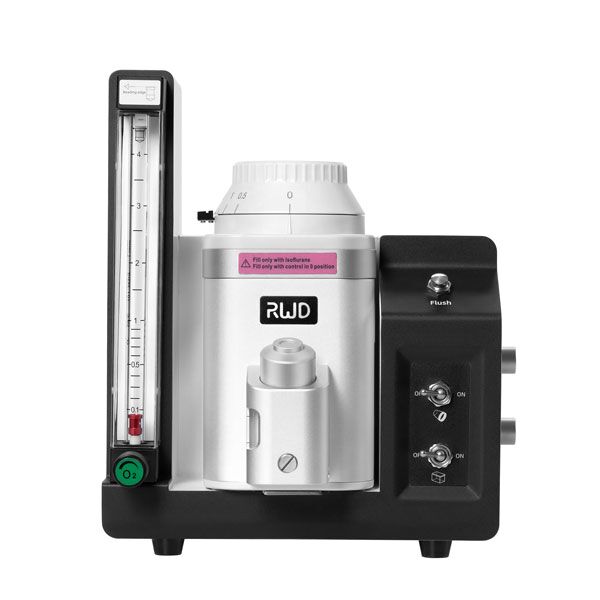
Moving forward, I prefer to think in terms of principles rather than brands. Modern designs embed smarter sensors, adaptive fresh gas flow control, and modular vaporizers that are easier to service. A robust rodent anesthesia machine will combine precise flowmeter readings with feedback loops that stabilize delivered concentration despite patient variability — that reduces manual correction and cognitive load on the clinician. In plain terms: fewer surprises, more predictable outcomes. — funny how that works, right?
From a comparative standpoint, key innovations include electronic flow control, real-time vaporizer compensation, and integrated scavenging monitors. These features address the classic failure modes I described earlier (leakage, drift, and ergonomics). I’ve seen labs switch to systems that log event traces; the logs become invaluable for audits and post-op reviews. That transparency matters to me because clinical decisions must be defensible in both practice and, if necessary, in review processes.
What to Expect Next
Expect tighter integration: sensors that talk to displays, alarms that prioritize based on physiologic risk, and modular parts that can be swapped without specialized tools. I also anticipate better material choices that resist kinking and degrade less under sterilization cycles. These practical improvements reduce downtime and protect staff from exposure.
Evaluation Metrics — Three Practical Criteria I Use
When I advise colleagues on procurement, I focus on three measurable metrics you can test before buying:
1) Accuracy under load: Verify vaporizer and flowmeter precision at low and high fresh gas flows. A device that reads true across the range reduces anesthetic variance.
2) Serviceability and parts access: Check whether seals, O-rings, and common wear items are user-replaceable and available without long lead times. Downtime equals risk.
3) Integrated scavenging and monitoring: Ensure the system provides active scavenger performance metrics or alarms. Occupational safety and environmental compliance are non-negotiable.
I speak from hands-on experience and a bit of fatigue from avoidable incidents; these metrics are pragmatic, not theoretical. If you run these checks, you cut risk and gain consistency. For further practical tools and to compare specific models, I recommend consulting device spec sheets and supplier service records — and yes, ask for references from labs with similar caseloads. In my work I’ve leaned on objective data and the occasional gut feeling; both matter. For devices that meet these standards and for more detailed product information, see BPLabLine.