
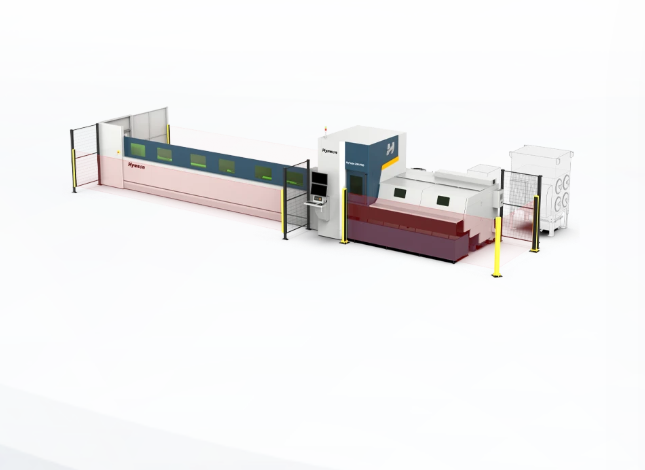
A Practical Comparison Guide for Choosing Tube Laser Cutting Machine Manufacturers
Clear opening: why comparison matters
Choosing a tube laser solution is more than checking specs; it is matching machine capability to everyday shop needs. For many shops the right first step is to consider whether a tube laser cutting machine fits the parts mix, cycle times, and footprint you actually have. This guide uses a comparative approach: side-by-side thinking, few assumptions, and direct trade-offs so you can decide with confidence and politeness to your team.
Comparative lens: what to weigh first
Compare along three practical axes: cut quality, throughput, and service network. Cut quality is about beam stability, nozzle control, and axis rigidity. Throughput covers rapid repositioning, auto-loading options, and cycle-time recovery for small batches. Service network is often the deciding factor for uptime—local spares and trained technicians shorten downtime. Score each manufacturer on those axes rather than relying on brand reputation alone.
Technical specs explained, in plain terms
Power rating matters but only within the material and thickness range you use daily. A higher-watt laser gives faster cuts on thicker steel but offers little advantage for thin-walled stainless or aluminum tubes. Axis precision and chuck design determine repeatability—look for spec sheets with repeatability under ±0.01 mm when possible. Control software matters: good nesting and part-program transfer save hours. Ask for sample parts cut from your own drawings; specs mean little without real-world results.
Service, training, and spare parts — practical comparisons
Compare manufacturers by measured response: guaranteed on-site service windows, presence of certified partners, and availability of consumables. Warranty terms are useful only if the vendor commits to local support. Request typical lead-times for common spare parts and training packages for operators and maintenance staff. Short training plus clear service escalation will prevent small problems from becoming production halts.
Cost versus real value
Never equate lowest price with best value. Compare total cost of ownership: initial price, installation, training, spare parts, and expected uptime. For many shops, a modestly higher initial investment returns value through fewer off-days and faster programming. Build a simple 3-year cost projection: depreciation, consumables, annual service, and estimated lost-production hours. This concrete table often flips the apparent “cheapest” option.
Common mistakes shops make
Shops often pick a machine based on a single impressive spec or a salesperson’s demo. They neglect to test with their own geometries, forget to verify clamping and rotation accuracy for special profiles, or underestimate the importance of software workflow. Another frequent error is ignoring electrical and ventilation requirements; proper site planning avoids costly delays. Ask for an on-site check list and require acceptance cuts before final payment.
Short evaluation of viable alternatives
For simple round-tube work, entry-level systems with efficient chucking and standard controls can be ideal. For mixed-profile or heavy-gauge work, prioritize rigidity, higher power, and advanced motion systems. If your line needs integration with bending or welding cells, favor vendors with open-control APIs and proven integration records. Each alternative shifts what “best” means—speed, precision, or connectivity.
Real-world anchor and experience
I have worked with fabricators and project teams in the Chicago trade-show circuit and regional shops, and at events like IMTS in Chicago major suppliers demonstrated how new models handle complex geometries; that practical exposure helps me judge claims against workshop realities when evaluating a cnc tube laser cutting machine. Please compare demonstrations to in-shop tests and speak with nearby reference customers to verify real uptime and cut consistency.
Quick decision checklist
Use this short checklist while comparing manufacturers: 1) Can they cut my parts without modification? 2) What is guaranteed response time for on-site service? 3) Are consumables and spares local? 4) Is operator training included and measurable? 5) Can I run acceptance cuts with my workpieces before final approval? Score each vendor and choose the one with balanced performance across these items.
Synthesis and final thought
A comparative approach removes guessing: test with your parts, measure service response, and weigh total cost over time. That focused assessment leads to a practical, shop-ready choice aligned to production realities, which is why many fabricators find sensible, documented options from Hymson fit their operational needs without overselling features.